

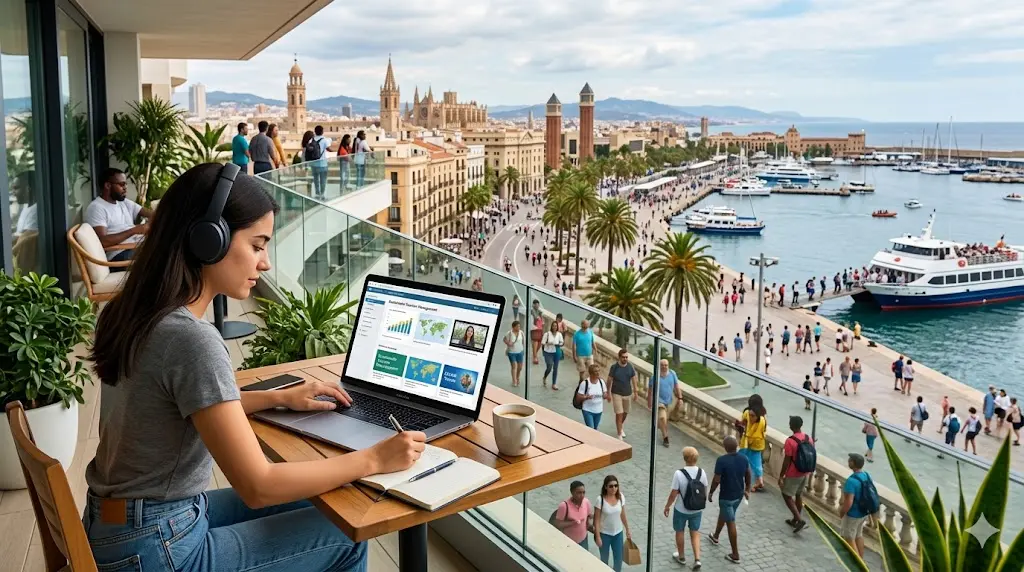
E-learning is reshaping the global tourism industry because travel businesses now need faster staff training, multilingual customer support, digital booking expertise, and remote learning systems that scale across countries. Hotels, airlines, tour companies, and tourism boards are realizing that traditional classroom training simply can't keep up with modern traveler expectations.
The tourism industry is using e-learning to train employees faster, reduce operational costs, improve customer experiences, and adapt to digital travel trends in 2026. From hotel onboarding to virtual destination training, online learning has become one of the biggest drivers of tourism workforce development worldwide.
The connection between e-learning and tourism probably seemed weak a decade ago. Not anymore. Today, e-learning is reshaping the global tourism industry in ways that affect almost every traveler, business owner, and tourism employee.
Think about it for a second. Travelers expect instant responses, personalized recommendations, digital booking support, and smoother experiences across borders. Tourism companies can't deliver that consistently unless their teams learn quickly and adapt even faster. That's where online tourism education and digital hospitality training come in.
I've seen smaller tourism businesses completely change their customer experience after switching to online staff training. What surprised me most wasn't the technology itself. It was how quickly employees became more confident when learning became flexible instead of forced.
Here's the thing: tourism now moves too fast for outdated training systems.
What Is E-Learning in the Tourism Industry?
E-Learning: A digital learning method where tourism employees, students, or business owners complete training online instead of attending physical classrooms.
In tourism, e-learning includes everything from hotel staff onboarding and travel certification programs to customer service simulations and destination knowledge courses.
This matters because tourism isn't a local industry anymore. A hotel in Dubai might serve guests from 40 countries in a single week. A tour operator in Thailand may hire remote customer support teams across different time zones. Traditional training struggles in that kind of environment.
E-learning solves several problems at once:
Faster employee onboarding
Lower training costs
Consistent service standards
Remote workforce education
Language and communication improvement
Easier compliance training
What most people overlook is that travelers indirectly benefit from this shift every single day. Better-trained tourism staff usually means fewer booking mistakes, smoother check-ins, and more personalized travel experiences.
Why E-Learning Matters in Tourism in 2026
Tourism in 2026 looks very different compared to even five years ago. Travelers expect digital convenience everywhere. At the same time, tourism companies are under pressure to hire quickly, train faster, and reduce operational expenses.
That's exactly why e-learning is reshaping the global tourism industry so aggressively right now.
A major reason is workforce instability. Hotels, airlines, and travel agencies often experience high employee turnover. Training new hires through physical workshops every few weeks costs time and money. Online tourism education allows businesses to train employees immediately without shutting down operations.
Another factor is international expansion.
Large hospitality brands now operate in dozens of countries simultaneously. Instead of building physical training centers everywhere, companies create centralized digital hospitality training systems employees can access anytime.
In my experience, this shift also improves employee retention more than many executives expect. Flexible learning gives workers a sense of growth instead of feeling stuck in repetitive service roles.
Expert Tip
Tourism companies that combine short mobile-friendly lessons with real-world roleplay exercises usually see better customer satisfaction scores than businesses relying only on classroom instruction.
How E-Learning Improves Tourism Workforce Skills
One of the strongest benefits of e-learning is skill specialization.
Older tourism training programs often focused on generic hospitality basics. Modern digital learning platforms now allow employees to train for very specific situations.
For example:
A front desk employee can learn how to handle luxury travelers differently from budget travelers. Tour guides can complete cultural sensitivity modules for international guests. Airline support teams can practice crisis communication through interactive simulations.
That's a huge shift.
And honestly, many tourism businesses underestimated how important this would become.
Real-World Example
A mid-sized resort chain in Southeast Asia struggled with inconsistent guest reviews across its properties. Management introduced a multilingual e-learning platform focused on customer interaction scenarios and complaint handling.
Within six months, guest satisfaction scores improved noticeably across several locations.
The interesting part? Staff turnover also decreased because employees felt more prepared and less stressed during peak tourist seasons.
That second effect is something many companies don't anticipate.
How to Implement E-Learning in Tourism Businesses Step by Step
Tourism businesses often overcomplicate digital training adoption. The smartest companies usually start small and scale gradually.
1. Identify Skill Gaps
Start by looking at recurring operational problems.
Are guests complaining about communication? Are booking errors common? Is onboarding taking too long?
Pinpointing the exact weakness makes e-learning far more effective.
2. Choose Mobile-Friendly Learning Platforms
Most tourism employees work on flexible schedules. Some rarely sit at desks.
Training needs to work on phones and tablets. Otherwise, participation rates drop pretty quickly.
3. Create Short Learning Modules
Here's what most guides miss: long training sessions rarely work in hospitality.
Short lessons between 5 and 15 minutes usually perform much better because employees can complete them during downtime.
4. Include Scenario-Based Learning
Tourism is highly emotional. Travelers remember how they were treated during stressful moments.
Interactive simulations help employees prepare for real guest situations instead of memorizing scripts.
5. Measure Performance Regularly
Track customer reviews, employee confidence, training completion rates, and operational mistakes.
The data often reveals whether training is solving actual business problems or just ticking boxes.
6. Update Training Constantly
Travel trends change fast. AI booking systems, sustainability expectations, and digital tourism tools evolve every year.
Static training becomes outdated surprisingly quickly.
Why Online Tourism Education Is Expanding Beyond Employees
E-learning isn't only for tourism staff anymore.
Universities, tourism boards, independent travel professionals, and even content creators are entering the space. People want flexible learning paths that help them enter the travel industry without relocating or paying huge tuition fees.
That's opening doors for:
Remote travel consultants
Independent tour operators
Sustainable tourism specialists
Digital nomads entering hospitality careers
Travel influencers learning destination marketing
One counterintuitive point here: online tourism education may actually increase demand for in-person experiences instead of replacing them.
At first glance, virtual learning sounds disconnected from real travel. But better-trained professionals often create more memorable guest experiences, which encourages repeat tourism.
Funny enough, digital education is helping make physical travel feel more human.
The Rise of Virtual Reality and Interactive Tourism Training
Virtual reality training is becoming a bigger part of tourism education, especially in luxury hospitality and aviation.
Employees can now practice difficult guest interactions or emergency procedures inside realistic digital environments before facing real customers.
Some airlines use VR simulations for cabin crew preparation. Hotels use virtual walkthroughs to train staff on property layouts before opening new locations.
That saves time. It also reduces costly mistakes.
I've spoken with hospitality managers who initially thought VR training was unnecessary hype. A year later, several admitted it reduced onboarding stress dramatically for new employees.
Technology doesn't always remove the human element. Sometimes it strengthens it.
Expert Tip
Interactive learning works best when employees can immediately apply lessons during real customer interactions. Theory alone usually fades fast in tourism roles.
Common Mistake: Assuming E-Learning Replaces Human Hospitality
This is probably the biggest misconception in the industry.
Some business owners worry that digital learning creates robotic employees. In reality, poor training creates robotic employees.
Good e-learning supports human interaction instead of replacing it.
The best tourism companies use online learning to improve empathy, communication, cultural awareness, and problem-solving skills. Employees become more adaptable because they feel prepared rather than overwhelmed.
Honestly, travelers can usually tell when staff members are confident versus poorly trained.
No learning platform can fake genuine hospitality. But strong training can absolutely improve it.
How Small Tourism Businesses Benefit Most
Large hotel chains get most of the attention, but smaller tourism businesses might gain even more from e-learning.
Why?
Because smaller companies usually can't afford expensive training departments.
A local tour company, boutique hotel, or family-owned travel agency can now access affordable digital hospitality training programs that were previously available only to major brands.
That's leveling the playing field a bit.
Mini Case Study
A small adventure tourism company in South America started using online safety certification modules and customer communication training for guides.
Before that, training depended entirely on shadowing experienced staff. Results were inconsistent.
After introducing structured online learning, customer reviews became more positive and accident reports dropped noticeably during peak season.
Simple systems sometimes create surprisingly large operational improvements.
Expert Tips: What Actually Works in Tourism E-Learning
Not every online training strategy succeeds. Some programs fail because they feel too corporate or disconnected from real tourism challenges.
Here are approaches that tend to work better in most cases.
Keep Training Conversational
Tourism is people-focused. Training should sound human too.
Rigid corporate language usually loses employee attention quickly.
Use Real Customer Situations
Generic examples don't stick.
Employees respond better to realistic guest complaints, cultural misunderstandings, booking errors, or emergency situations they've probably seen before.
Reward Progress Publicly
Recognition matters in hospitality.
Simple certifications or internal acknowledgments can improve participation rates more than companies expect.
Allow Flexible Learning Times
Tourism schedules are unpredictable. Employees need freedom to complete training around operational demands.
Focus on Soft Skills
Technical systems matter, sure. But emotional intelligence often shapes customer satisfaction far more than software knowledge.
People Most Asked About E-Learning and Tourism
How does e-learning improve customer experience in tourism?
E-learning helps tourism employees respond faster, communicate more clearly, and solve guest problems more effectively. Better-trained staff usually create smoother travel experiences and stronger customer trust.
Is online tourism education effective for practical hospitality skills?
Yes, especially when combined with real-world practice. Scenario-based learning, simulations, and interactive modules often prepare employees for actual guest situations surprisingly well.
Why are tourism companies investing more in digital hospitality training?
Tourism businesses need scalable, affordable training systems that work across multiple locations and flexible schedules. Digital training also helps companies adapt faster to industry changes.
Can small tourism businesses benefit from e-learning?
Absolutely. Smaller businesses often gain significant advantages because online training reduces costs while improving service consistency and employee confidence.
Does e-learning replace traditional tourism education?
Not completely. In many cases, it complements hands-on learning rather than replacing it. The strongest programs combine digital instruction with practical experience.
What skills are most commonly taught through tourism e-learning?
Customer service, booking systems, language communication, cultural sensitivity, crisis handling, digital marketing, sustainability practices, and hospitality management are among the most common topics.
Is virtual reality becoming common in tourism training?
It's growing steadily, especially in aviation, luxury hospitality, and emergency response training. Costs are gradually decreasing, making VR more accessible for tourism businesses.
Final Thoughts
E-learning is reshaping the global tourism industry because modern travel businesses need faster learning systems, adaptable employees, and scalable training methods that match the speed of global tourism itself.
And honestly, this shift is probably still in its early stages.
Travelers now expect highly personalized service combined with digital convenience. Tourism companies that invest in online tourism education and digital hospitality training are better positioned to meet those expectations consistently.
What fascinates me most is how technology is indirectly making tourism feel more personal instead of less. Better-trained employees tend to communicate with more confidence, empathy, and cultural awareness.
That human connection still matters more than anything else in travel.
Businesses and agencies looking to improve brand visibility and organic traffic can benefit from professional press release distribution services combined with advanced SEO services. These platforms help startups, bloggers, and SEO professionals secure high authority backlinks, stronger media coverage, better SEO ranking, and instant publishing opportunities that support long-term digital growth.