

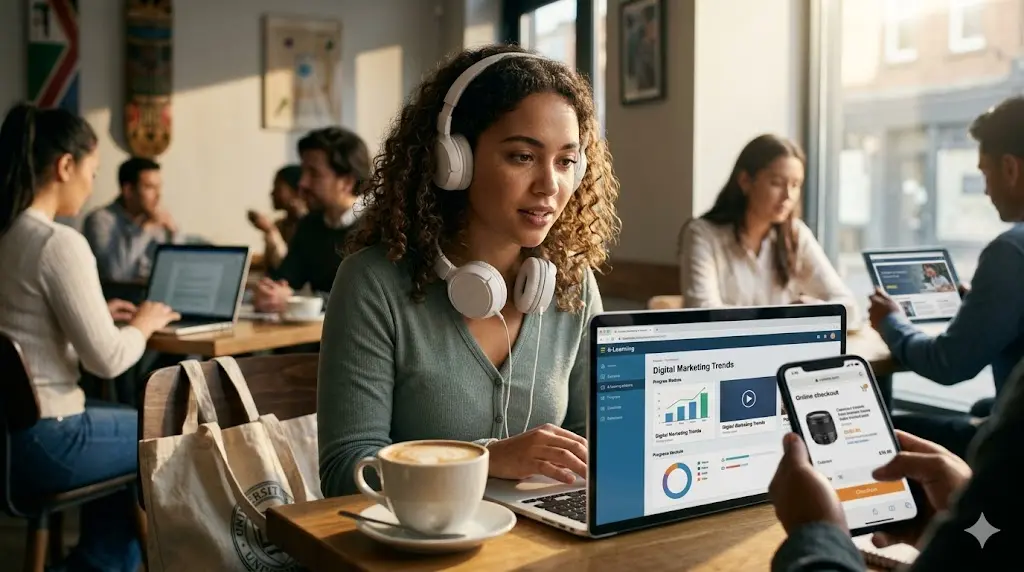
People don’t shop the same way they did even five years ago, and e-learning is a major reason why. From online product tutorials to short certification courses and expert-led webinars, digital education is quietly shaping how consumers research, compare, and buy products across the world. Buyers are becoming more informed, more skeptical, and far more selective before spending money.
E-learning is changing consumer buying behaviour worldwide by giving people instant access to product knowledge, reviews, training, and comparison content before they make purchases. Consumers now rely on educational content to guide buying decisions, which has increased demand for transparency, trust, personalization, and value-driven marketing.
What Is E-Learning and Why Does It Matter?
E-learning means learning through digital platforms such as online courses, webinars, tutorials, mobile apps, and virtual classrooms instead of traditional in-person education.
Here’s the thing: e-learning is no longer limited to schools or corporate training. It now influences how regular people shop for fitness products, software, skincare, financial tools, electronics, and even groceries.
A consumer who watches three hours of educational videos about photography probably won’t buy the cheapest camera anymore. They’ll compare lens quality, sensor size, brand reputation, and editing software compatibility. Knowledge changes spending habits. That’s the shift happening worldwide.
In many cases, e-learning content acts as the new salesperson. Instead of trusting advertisements, consumers now trust tutorials, comparison videos, community learning groups, and educational content creators.
That’s a big change.
And honestly, I think many brands underestimated this shift at first.
Expert Tip
Brands that educate customers before selling usually build stronger trust and repeat purchases. Educational content often converts better than direct promotional campaigns because consumers feel informed rather than pressured.
Why E-Learning Matters in 2026
By 2026, digital learning is expected to influence nearly every major buying category. Consumers aren’t just browsing products anymore. They’re studying them.
What most people overlook is that modern consumers want confidence more than convenience. E-learning gives them that confidence.
Someone buying a smartwatch today might first watch:
Fitness tracking tutorials
Product comparison lessons
Health monitoring explainers
Long-term user reviews
Setup walkthroughs
After consuming all that information, buyers usually make more deliberate choices. Impulse buying still exists, sure, but informed buying has grown much faster.
This shift is especially visible in industries like:
Consumer technology
Health and wellness
Online software
Personal finance
Beauty and skincare
Home improvement
Education products
A few years ago, many shoppers relied heavily on advertising slogans. Now they rely on educational ecosystems.
That’s a completely different customer mindset.
The Rise of Consumer Education Marketing
Brands worldwide are investing heavily in learning-based marketing strategies because educational content increases trust and customer retention. Short courses, product demos, and interactive tutorials are becoming standard.
In my experience, companies that explain products clearly often outperform competitors with larger advertising budgets.
Consumers simply reward clarity.
How E-Learning Is Changing Consumer Buying Behaviour Worldwide
Consumers Research Longer Before Buying
People now spend more time learning before purchasing. Educational videos, product explainers, live workshops, and online communities have made consumers more patient during the decision-making process.
That’s why product pages alone often aren’t enough anymore.
A buyer considering expensive headphones may spend days comparing audio engineering lessons, user experiences, and sound quality demonstrations before ordering anything.
More knowledge creates more selective consumers.
Trust Has Become More Valuable Than Discounts
This part surprises many marketers.
Lower prices don’t always win anymore.
Consumers educated through e-learning often prefer trusted brands with better support, transparency, and educational resources over cheaper alternatives.
A skincare brand that teaches ingredient science can outperform a cheaper competitor using aggressive promotions.
Why? Because informed consumers value understanding.
Educational Content Shapes Brand Loyalty
Once people learn through a company’s content, they often stick with that brand.
Think about it logically. If a business helps you understand investing, cooking, coding, or fitness before asking for money, you’re more likely to trust them later.
E-learning creates emotional familiarity.
And familiarity drives buying behaviour.
Consumers Expect Personalized Experiences
E-learning platforms have trained users to expect customized recommendations. Because of that, consumers now expect shopping experiences to feel equally personalized.
If someone completes beginner photography lessons online, they expect camera recommendations suited to beginners — not random premium equipment they don’t need.
That expectation affects nearly every industry today.
Expert Tip
Educational personalization works best when brands simplify complicated topics. Consumers rarely want more information. They want clearer information.
How Businesses Can Adapt Step by Step
1. Create Educational Content Before Selling
Consumers respond better when they learn something useful first.
Brands should focus on tutorials, guides, workshops, webinars, and explainer videos that solve actual problems rather than pushing direct promotions constantly.
A software company, for example, might teach productivity methods before promoting subscriptions.
That approach usually feels more authentic.
2. Focus on Real Questions Consumers Ask
Search behaviour has changed dramatically because of e-learning.
People search phrases like:
“Which laptop is best for beginners?”
“How does this supplement actually work?”
“What should I avoid before buying?”
Answering those questions builds trust faster than polished advertising copy.
3. Build Community-Based Learning
Online learning communities influence buying decisions heavily.
Forums, discussion groups, interactive classes, and user-generated learning spaces create stronger brand relationships because people trust peer education.
One realistic example: a fitness equipment company launched free weekly training sessions online. Product sales increased because customers associated the brand with guidance rather than just equipment.
Simple idea. Big results.
4. Use Short-Form Learning Content
Attention spans are messy these days. Most consumers won’t sit through a 45-minute explanation unless they’re deeply invested already.
Short educational clips often perform better:
One-minute tutorials
Quick product lessons
Bite-sized comparisons
FAQ videos
Beginner explainers
Consumers want fast learning without feeling overwhelmed.
5. Make Buying Decisions Easier, Not Harder
Here’s a counterintuitive point: too much information can reduce purchases.
Some brands overload customers with endless educational content and complicated technical details. That sometimes creates analysis paralysis.
Good e-learning simplifies choices instead of confusing people.
That balance matters more than many companies realize.
A Realistic Case Study: How Education Increased Sales
A mid-sized kitchen appliance company struggled with online sales despite competitive pricing.
Instead of increasing ad spending, the company started producing beginner cooking tutorials using its appliances naturally during lessons. They didn’t aggressively promote products. They simply taught practical cooking skills.
Within months, customers spent longer on the company website, return rates dropped, and repeat purchases increased.
Why?
Consumers felt educated and supported.
That emotional trust changed purchasing behaviour more than discounts ever did.
Honestly, this strategy probably works better long-term than most flashy advertising campaigns.
What Common Misconceptions Do People Have?
More Information Doesn’t Always Mean Better Decisions
Many assume highly educated consumers always make smarter purchases.
Not exactly.
Sometimes excessive learning creates confusion. Consumers jump between conflicting expert opinions and delay buying entirely.
You’ve probably done this yourself at some point. I definitely have.
Watch ten reviews about one product and suddenly every option feels flawed.
Brands need to simplify decision-making rather than overwhelm audiences with endless details.
Cheap Products Aren’t Automatically Rejected
Some marketers believe educated consumers only buy premium products.
That’s not true either.
Informed buyers still care about value. They simply expect better explanations, honest reviews, and proof of quality before purchasing cheaper products.
Transparency matters more than price category.
How E-Learning Influences Different Industries
Technology and Electronics
Consumers now learn technical concepts before purchasing devices. Tutorials, reviews, and educational comparisons strongly influence buying choices.
People want compatibility explanations, long-term usability insights, and realistic demonstrations.
Health and Wellness
Fitness coaches, nutrition educators, and wellness creators shape buying behaviour daily.
Consumers often purchase supplements, workout programs, or wearable devices after learning from educational content first.
Finance
Online financial education has transformed investing behaviour globally.
More consumers now research budgeting, cryptocurrency, insurance, and investing strategies before choosing financial products.
That’s made buyers more cautious — and honestly, more demanding too.
Expert Tip
Companies in technical industries should focus on simplifying jargon. Clear educational communication often outperforms complex expertise.
The Psychological Shift Behind E-Learning and Buying Behaviour
This goes deeper than marketing tactics.
E-learning changes consumer psychology itself.
People feel more independent after learning online. They trust their own research more than traditional advertising.
That creates:
Higher expectations
Lower tolerance for misleading claims
Greater comparison shopping
More confidence in rejecting poor products
Consumers no longer rely solely on salespeople to guide decisions.
They educate themselves first.
That power shift is massive.
People Most Asked About How E-Learning Is Changing Consumer Buying Behaviour Worldwide
Why does e-learning affect buying decisions?
E-learning gives consumers access to product education, expert opinions, and comparison content before purchases. Better-informed consumers usually spend more carefully and expect greater transparency from brands.
Does educational content really increase sales?
Yes, in most cases it does. Educational content builds trust and reduces buyer uncertainty. Consumers are more likely to purchase when they fully understand how products solve problems.
Which industries benefit most from e-learning-driven buying behaviour?
Technology, finance, fitness, wellness, beauty, and software industries see major effects because consumers often research heavily before making decisions in these categories.
Are consumers becoming harder to market to?
Probably yes. Educated buyers ask more questions, compare more options, and expect honest communication. Traditional advertising alone is often less effective now.
Can small businesses use e-learning strategies too?
Absolutely. Small businesses can create tutorials, webinars, short guides, and educational social content to compete effectively without huge advertising budgets.
Does e-learning reduce impulse buying?
In many situations, yes. Consumers who spend time learning about products tend to make more deliberate purchasing decisions rather than emotional impulse buys.
What’s the biggest mistake brands make?
Overcomplicating information. Consumers appreciate education, but they still want clarity and simplicity during the buying process.
Final Thoughts
E-learning is changing consumer buying behaviour worldwide because knowledge changes confidence, expectations, and trust. Consumers today don’t just buy products. They study them first.
That shift has forced businesses to rethink marketing entirely.
Brands that educate audiences clearly, honestly, and consistently are far more likely to earn trust and long-term loyalty. Meanwhile, companies relying only on aggressive promotions may struggle as consumers become more informed and selective.
From what I’ve seen, the future belongs to businesses that teach first and sell second.
And honestly, that’s probably better for consumers too.
Our network platforms help businesses improve brand visibility, SEO ranking, and organic traffic through powerful press release distribution services and trusted digital marketing services. Whether you're a startup, agency, or growing business, these solutions support instant publishing, media coverage, high authority backlinks, and stronger online reach that attracts targeted audiences more effectively.