

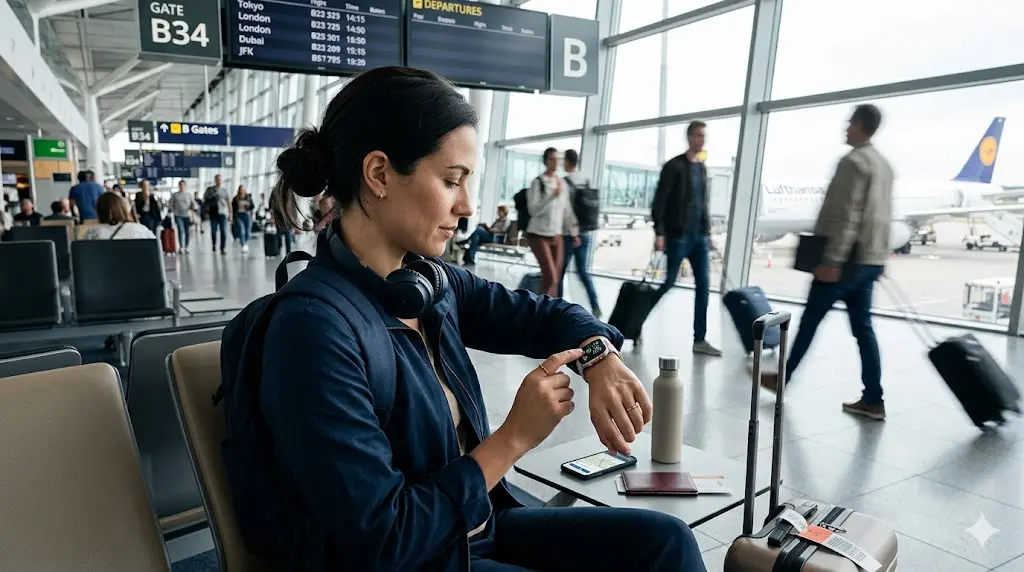
International travel has changed fast over the last few years, and wearable technology is a big reason why. From smartwatches that translate languages in real time to health-tracking bands that help travelers move through airports more confidently, these devices are becoming part of the travel experience itself. If you travel often, you've probably already noticed how wearables quietly reduce stress, improve safety, and make planning easier.
Wearable technology is transforming international travel by improving convenience, health monitoring, security, navigation, and communication. Smart devices now help travelers manage flights, payments, language translation, fitness, and emergency alerts without constantly using phones or paper documents.
What Is Wearable Technology and Why Does It Matter?
Wearable Technology: Electronic devices designed to be worn on the body that collect, process, or share data in real time.
That sounds technical, but here's the simple version: wearable devices are gadgets you wear instead of carry. Think smartwatches, fitness trackers, smart rings, wireless earbuds, and even smart glasses.
In the context of international travel, these devices do far more than count steps. They track health metrics during long flights, give boarding alerts, support digital payments, translate foreign languages, and even help travelers avoid unsafe areas through location-based notifications.
What most people overlook is this: wearable technology isn't replacing travel planning. It's reducing friction during travel itself.
A decade ago, travelers depended on printed tickets, physical maps, cash exchanges, and hotel paperwork. Now, many people cross borders carrying little more than a passport and a smartwatch. That's a massive behavioral shift.
Expert Tip
If you're traveling internationally for more than a week, sync your wearable with offline maps and emergency contacts before departure. Most travelers remember chargers but forget backup access settings. That small detail matters more than you'd think when you're in another country at 2 a.m.
Why Wearable Technology Matters in 2026
By 2026, wearable technology has moved beyond being a luxury gadget for tech enthusiasts. Airlines, hotels, tourism agencies, and even immigration systems are adapting to travelers who expect instant access and real-time information.
One of the biggest reasons this matters is speed.
International airports are crowded, unpredictable, and honestly a little exhausting. Wearables reduce decision fatigue. A smartwatch can notify you about gate changes, boarding delays, local weather, and transportation updates without forcing you to constantly unlock your phone.
There's also the health side of things. Long-haul travel creates real physical stress. Smart health trackers monitor oxygen levels, heart rate, sleep cycles, hydration, and movement patterns during flights. Frequent travelers use this data to manage jet lag and travel fatigue more effectively.
I've seen business travelers rely heavily on wearable health tracking during multi-country trips. One executive I spoke with during a conference trip to Singapore adjusted his sleep schedule entirely using smartwatch recovery data. He claimed it helped him stay productive across three time zones. That might sound excessive, but honestly, there's probably some truth to it.
Another major shift is contactless travel.
Many international airports and hotels now support wearable-enabled payments, digital room access, and biometric verification. Travelers no longer need to dig through bags searching for cards or printed confirmations.
Here's the thing though: convenience comes with trade-offs.
Wearables collect enormous amounts of personal data, including location history and health information. Travelers often ignore privacy settings because they're focused on ease of use. That could become one of the biggest concerns in the future of smart travel technology.
How Wearable Technology Improves International Travel
1. Real-Time Navigation and Translation
Language barriers remain one of the hardest parts of traveling abroad. Smart earbuds and AI-powered wearables now offer live translation features that make conversations smoother.
Instead of typing phrases into a phone app, travelers can hear translations instantly during conversations. That's especially useful in airports, taxis, hotels, and emergency situations.
Navigation has improved too. Smart glasses and watches now provide walking directions without requiring travelers to stare at maps every few minutes. That sounds minor until you're trying to navigate unfamiliar streets in a crowded city.
2. Health Monitoring During Long Trips
Travel can be physically draining. Wearables help people monitor sleep quality, stress levels, hydration, and movement during long international journeys.
Some devices even detect irregular heart activity or abnormal fatigue patterns. Older travelers and people with medical conditions often find this especially reassuring.
A realistic example? Imagine a traveler flying from Delhi to London with a 10-hour layover. A wearable device can remind them to move regularly, drink water, and adjust sleep timing to reduce jet lag. Small prompts. Big impact.
3. Contactless Payments and Digital Access
International travelers increasingly rely on wearable payment systems instead of physical wallets.
Smartwatches now support airport purchases, hotel check-ins, train tickets, and public transport access. That reduces currency exchange hassles and speeds up transactions.
In my experience, travelers underestimate how mentally exhausting constant payment conversions can be. Wearables simplify that process quietly in the background.
4. Improved Safety and Emergency Support
Safety features are becoming more advanced each year. Many wearables now include location tracking, emergency SOS alerts, and fall detection.
Solo travelers benefit the most here.
A traveler hiking alone in another country can share real-time location data with family or emergency contacts. Some devices automatically trigger alerts if unusual activity is detected.
What surprises many people is that wearable safety tech isn't only useful outdoors. Even urban travelers use emergency alerts during late-night transit or unfamiliar commutes.
Expert Tip
Always carry a traditional backup payment method even if your wearable supports contactless transactions. International payment systems still fail sometimes, especially in smaller cities or rural areas.
How to Use Wearable Technology for International Travel
Step 1: Choose the Right Device
Not every wearable suits international travel. Some prioritize fitness while others focus on communication or payments.
Travelers should look for:
Long battery life
Offline navigation support
International payment compatibility
Health monitoring features
Water resistance
A device that dies halfway through a travel day becomes dead weight pretty quickly.
Step 2: Sync Important Travel Information
Before leaving, connect your wearable to:
Boarding passes
Hotel reservations
Emergency contacts
Currency apps
Translation tools
Most people set this up at the airport, which honestly creates unnecessary stress.
Step 3: Activate International Features
Some wearable payment systems and mobile networks require international activation before travel. Check roaming support and regional restrictions ahead of time.
This sounds boring, but skipping this step can lock you out of critical features overseas.
Step 4: Protect Your Data
Travelers should update passwords, enable biometric security, and turn on remote device locking before departure.
Public Wi-Fi networks remain risky, especially in major tourist areas.
Step 5: Manage Battery Usage
Battery management becomes essential during long travel days. Lower screen brightness, disable unnecessary background apps, and carry portable chargers.
What most travel guides miss is that cold weather destroys wearable battery performance surprisingly fast.
A Counterintuitive Problem Most Travelers Ignore
You'd think more technology automatically creates a better travel experience. Not always.
Some travelers become overly dependent on wearables and stop paying attention to their surroundings. They rely entirely on digital prompts, automated directions, and AI recommendations.
That creates a strange kind of travel blindness.
I've personally seen travelers walk through historically rich neighborhoods while staring at smartwatch notifications the entire time. They technically visited the destination, but barely experienced it.
There's also the issue of digital exhaustion. Constant alerts, health tracking, and notifications can make travel feel monitored rather than enjoyable.
Sometimes removing the device for a few hours improves the trip more than upgrading the technology.
Expert Tips and What Actually Works
Here's my hot take: wearable technology works best when it fades into the background.
The goal shouldn't be to turn travel into a fully automated experience. The goal is reducing friction while keeping the human side of travel alive.
Frequent travelers usually benefit most from:
Minimalist smartwatches with strong battery life
Translation earbuds for non-English regions
Smart rings for discreet health tracking
Offline-enabled navigation systems
One traveler I interviewed during a transit stop in Dubai used a smartwatch mainly for silent airport updates. No social media. No unnecessary notifications. Just flight alerts, maps, and payment access. Honestly, that's probably the smartest way to use wearable travel tech.
Another overlooked point involves travel anxiety.
Wearables can reduce stress levels by giving travelers more control over schedules, navigation, and health monitoring. But they can also increase anxiety when users obsess over metrics like sleep scores or heart rate changes during long-haul flights.
Balance matters more than features.
Expert Tip
Disable non-essential notifications before international trips. You'll enjoy destinations more when your wearable acts like a travel assistant instead of another demanding screen.
What Does Research Say About Wearable Technology and Travel?
Research on wearable technology shows consistent growth in tourism, aviation, and hospitality industries. Travel companies increasingly invest in biometric systems, AI-assisted wearables, and health-monitoring integration.
Airports are experimenting with wearable-linked identity systems that reduce document checks and waiting times. Hotels are testing wearable room access and personalized guest experiences.
Travel behavior is changing too.
Modern travelers value speed, personalization, and contactless experiences more than previous generations did. Wearables support all three.
At the same time, researchers continue studying privacy concerns, cybersecurity risks, and overdependence on connected devices. That's probably where future debates will become more intense.
Because here's the reality: smart travel technology collects deeply personal information. Location history alone reveals behavioral patterns most travelers never think about.
People Most Asked About Wearable Technology and International Travel
How does wearable technology help international travelers?
Wearable technology helps travelers manage navigation, payments, health tracking, translation, and safety more efficiently. It reduces the need for physical documents and improves convenience during travel.
Are wearable devices safe for international payments?
In most cases, yes. Modern wearable payment systems use encryption and biometric authentication. Still, travelers should enable security settings and carry backup payment options.
Can wearables reduce jet lag?
Some wearable devices monitor sleep patterns, hydration, and recovery metrics that help travelers adjust to new time zones. While they don't eliminate jet lag entirely, they can improve recovery strategies.
What are the biggest risks of wearable travel technology?
Privacy concerns, battery dependence, and cybersecurity risks remain the biggest issues. Travelers who rely too heavily on connected devices may also experience digital fatigue.
Which wearable devices are best for frequent travelers?
Devices with long battery life, offline support, translation tools, health tracking, and international payment compatibility tend to work best for regular travelers.
Will wearable technology replace smartphones during travel?
Probably not completely. Smartphones still handle complex communication and travel planning better. Wearables are more likely to become companion devices rather than full replacements.
Is wearable technology expensive for travelers?
Prices vary widely. Basic fitness trackers are affordable, while advanced smartwatches and smart glasses cost significantly more. Travelers should focus on practical features instead of buying every new device.
Final Thoughts on Research on Wearable Technology and Its Impact on International Travel
Research on wearable technology and its impact on international travel shows one clear trend: travel is becoming more connected, personalized, and data-driven. Wearables now influence how people move through airports, manage health abroad, communicate across languages, and stay safe in unfamiliar environments.
Still, technology works best when it supports the travel experience instead of controlling it.
The smartest travelers in 2026 probably won't be the ones wearing the most advanced devices. They'll be the people using wearable technology intentionally, quietly, and without letting it distract from the actual journey.
Businesses and agencies aiming to improve brand visibility and organic traffic can benefit from trusted platforms like PR Wires and Rank Locally UK for high authority backlinks, instant publishing, and stronger SEO ranking. Their professional press release distribution services, digital marketing services, and local SEO services help startups, bloggers, and SEO professionals secure better media coverage while driving long-term search growth.