

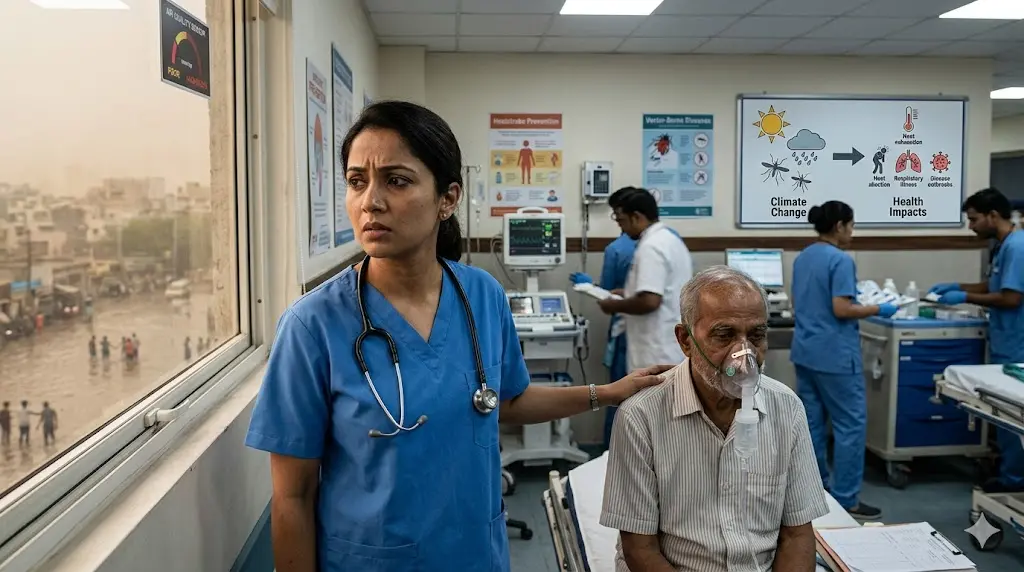
Climate change is no longer just an environmental issue. It’s becoming one of the biggest public health challenges the world has ever faced. Hospitals, healthcare workers, and patients are already dealing with rising heat-related illnesses, infectious diseases, poor air quality, and mental health stress tied directly to climate shifts.
Healthcare systems worldwide are under pressure because climate-related events don’t just damage infrastructure. They increase patient loads, disrupt medicine supplies, and expose vulnerable populations to greater risks. That’s why climate change in healthcare has moved from a side discussion to a frontline concern.
Climate change is affecting healthcare worldwide by increasing heat-related illnesses, respiratory diseases, infections, mental health conditions, and emergency medical demands. Rising temperatures, pollution, floods, and extreme weather events are forcing hospitals and healthcare systems to adapt quickly while managing higher costs and patient risks.
What Is Climate Change in Healthcare?
When people talk about climate change in healthcare, they mean the connection between environmental changes and human health outcomes. It includes how rising temperatures, natural disasters, pollution, and changing disease patterns affect hospitals, medical workers, and patient care.
Climate change in healthcare refers to the growing impact of environmental changes on public health systems, disease patterns, medical infrastructure, and patient safety.
Here’s the thing most people overlook: healthcare itself also contributes to environmental damage. Hospitals consume enormous amounts of energy, produce medical waste, and rely heavily on transportation and supply chains. So the relationship works both ways.
In my experience, many discussions focus only on melting glaciers or rising sea levels. But for ordinary families, climate change often becomes real the moment someone ends up in an emergency room during a heatwave.
A simple example explains it well. Imagine a city facing ten straight days of extreme heat. Elderly people become dehydrated faster. Patients with asthma struggle because air pollution gets worse. Emergency departments suddenly fill up. Staff become overworked. Ambulances face delays. What looked like “just weather” quickly becomes a healthcare crisis.
Why Climate Change Matters in Healthcare in 2026
By 2026, healthcare systems are expected to face even greater pressure from climate-related health problems. Scientists and public health experts have warned about this for years, but now hospitals are seeing it firsthand.
Heatwaves are becoming more frequent and lasting longer. Floods and storms are damaging clinics and disrupting patient access. Mosquito-borne illnesses are spreading into regions that previously didn’t face those risks.
What’s surprising is that wealthy countries aren’t protected either.
A lot of people assume climate-linked health problems mainly affect poorer nations. That’s partly true because vulnerable communities often suffer first. Still, recent years have shown hospitals in developed countries struggling during extreme weather events too. Power outages, overcrowded emergency units, and medicine shortages can happen almost anywhere.
Air Pollution Is Quietly Driving Healthcare Costs
Air pollution and healthcare costs are closely connected. Poor air quality increases respiratory diseases like asthma and chronic lung conditions. Heart disease risks also rise when pollution levels increase.
Children and older adults are especially vulnerable.
One study after another shows spikes in hospital admissions during periods of high pollution. That creates financial pressure on healthcare systems already stretched thin. Insurance providers, governments, and hospitals end up spending billions treating preventable conditions linked to environmental exposure.
And honestly, this part doesn’t get enough attention.
Most people think of climate change as dramatic disasters. Yet some of the biggest health impacts happen slowly and quietly through dirty air and long-term exposure.
Mental Health Is Becoming a Major Climate Issue
Mental health and climate change are increasingly connected. After floods, wildfires, or hurricanes, anxiety and depression rates often rise sharply.
People who lose homes or livelihoods face emotional trauma that can last years.
Healthcare workers also experience burnout during repeated climate emergencies. Imagine treating hundreds of patients during a severe heatwave while dealing with staff shortages and limited supplies. That pressure adds up fast.
I remember reading about communities recovering from major flooding where children became fearful every time it rained heavily afterward. That emotional stress may not appear in headlines, but healthcare providers see it every day.
Expert Tip
Healthcare organizations that invest early in climate-resilient infrastructure often reduce long-term emergency costs. Backup energy systems, cooling centers, and telemedicine support can make a huge difference during extreme weather events.
How Climate Change Impacts Healthcare Systems Step by Step
Climate change doesn’t affect healthcare through one single pathway. It creates a chain reaction. Here’s how it usually unfolds.
1. Extreme Weather Events Increase Medical Emergencies
Heatwaves, floods, storms, and wildfires create sudden spikes in injuries and illnesses.
Emergency rooms can become overwhelmed within hours. Patients with chronic illnesses are often hit hardest because interruptions in treatment become dangerous quickly.
During severe storms, even transportation becomes a medical issue. Ambulances may struggle to reach patients, and supply deliveries can get delayed.
2. Disease Patterns Begin to Shift
Warmer temperatures allow insects like mosquitoes and ticks to survive in new regions.
That means diseases once limited to certain climates may appear elsewhere. Healthcare workers need updated training, better surveillance systems, and faster response plans.
This shift probably catches many communities off guard because people don’t expect “tropical” illnesses in cooler areas.
3. Healthcare Infrastructure Faces Pressure
Hospitals rely on stable electricity, clean water, transportation, and communication systems.
Climate-related disasters can disrupt all of them at once.
Imagine a hospital operating during a prolonged blackout while dealing with hundreds of additional patients. Backup systems help, but they aren’t always enough.
4. Vulnerable Populations Suffer More
Older adults, low-income families, children, and people with chronic illnesses face higher risks during climate emergencies.
Some lack access to cooling, transportation, or healthcare support.
That inequality creates another challenge for healthcare systems because prevention becomes harder when communities already struggle with resources.
5. Healthcare Costs Continue Rising
Climate-related illnesses and emergency responses increase healthcare spending significantly.
Governments and hospitals must spend more on disaster preparedness, staffing, equipment, and infrastructure repairs. Insurance costs may rise too.
And unfortunately, those expenses often get passed down to ordinary patients.
Expert Tip
Hospitals that build partnerships with local communities tend to respond more effectively during climate emergencies. Strong local coordination improves evacuation planning, emergency communication, and patient support systems.
What Most People Misunderstand About Climate Change and Healthcare
Healthcare Isn’t Only Responding to Climate Change — It’s Also Contributing to It
This is the counterintuitive part.
Healthcare exists to protect human life, yet the industry itself generates substantial carbon emissions. Large hospitals use huge amounts of electricity and produce mountains of waste every single day.
Medical supply chains involve transportation, manufacturing, packaging, refrigeration, and disposal systems that consume energy constantly.
That doesn’t mean healthcare providers are doing something wrong. Saving lives naturally requires resources. Still, it does mean hospitals now face pressure to become more sustainable without sacrificing patient care.
Some hospitals have started using renewable energy systems, reducing unnecessary waste, and improving energy efficiency. Small operational changes might sound boring, but they can lower costs and improve resilience during emergencies.
In my opinion, this is where healthcare discussions are heading next. Not just “How do we survive climate change?” but also “How do healthcare systems stop making the problem worse?”
Real-World Example: Heatwaves and Emergency Rooms
Let’s look at a realistic scenario.
During a severe summer heatwave, a major urban hospital starts seeing rising cases of dehydration, kidney stress, fainting, asthma attacks, and heart complications. Staff shortages become worse because healthcare workers themselves are affected by the heat.
Now add power demand surges across the city.
Electricity becomes unstable. Cooling systems strain under pressure. Emergency generators may need to activate. Pharmacies experience supply delays. Patients waiting for treatment grow frustrated.
That’s not science fiction anymore. Similar situations have happened in multiple countries over recent years.
Healthcare systems were designed for stability. Climate change introduces unpredictability, and that changes everything.
How Healthcare Systems Are Adapting
The good news is that healthcare organizations are beginning to adapt faster than many people realize.
Some hospitals are redesigning buildings to withstand floods and extreme heat. Others are improving ventilation systems to protect against smoke and pollution exposure.
Telemedicine is also helping.
Patients who can safely stay home reduce pressure on overcrowded emergency departments. Remote consultations became more common after global health emergencies, and climate-related disruptions are pushing that trend further.
Another smart strategy involves predictive healthcare planning. Some hospitals now monitor weather forecasts alongside patient data to prepare staffing and resources before emergencies happen.
It sounds simple, but preparation saves lives.
Expert Tip
Healthcare facilities that train staff regularly for climate-related emergencies usually recover faster during actual disasters. Practice drills matter far more than most administrators expect.
Why Public Health Policies Matter More Than Ever
Climate change and public health policy are tightly connected.
Governments play a major role in determining how prepared healthcare systems become. Investment decisions made today affect whether hospitals can handle future climate pressures.
Policies around clean energy, pollution reduction, urban planning, and emergency preparedness all influence healthcare outcomes indirectly.
For example, cities with more green spaces often experience slightly lower urban temperatures. That may reduce heat-related illnesses during extreme summers.
Cleaner transportation systems can also improve air quality, which lowers respiratory disease burdens over time.
What most people miss is that climate policy often becomes healthcare policy whether governments intend it or not.
The Human Side of the Problem
Data matters. Statistics matter too.
But healthcare workers usually remember individual stories more than numbers.
A nurse caring for elderly patients during a blackout. A child struggling to breathe during wildfire smoke exposure. Families displaced after flooding while trying to access medications.
Those moments change how people view climate change.
I think that’s why healthcare professionals are speaking more openly about the issue now. They’re seeing the consequences directly instead of debating abstract predictions.
And frankly, many doctors believe the situation is moving faster than healthcare systems expected.
Expert Tips: What Actually Works
Healthcare systems responding effectively to climate challenges often share a few practical strategies:
They invest in prevention instead of waiting for disasters.
Hospitals improve local supply chains rather than relying entirely on distant providers.
Communities receive better education about heat safety, air quality, and emergency preparedness.
Mental health services become part of disaster recovery plans instead of an afterthought.
Healthcare leaders coordinate closely with local governments and emergency responders.
Here’s my hot take: massive technological breakthroughs probably won’t solve everything alone. In most cases, better planning, stronger infrastructure, and faster coordination matter just as much.
Fancy innovations help. Reliable preparation helps more.
People Most Asked About Climate Change in Healthcare
Why does climate change affect healthcare?
Climate change increases health risks through heatwaves, pollution, natural disasters, food insecurity, and changing disease patterns. Hospitals and healthcare workers must manage higher patient volumes and emergency situations more frequently.
How does air pollution impact public health?
Poor air quality increases respiratory illnesses, heart disease risks, asthma attacks, and long-term lung damage. Vulnerable groups like children and older adults usually experience the strongest effects.
Can hospitals prepare for climate emergencies?
Yes, many hospitals are improving infrastructure, backup power systems, emergency planning, and telemedicine services. Preparation significantly improves response capacity during disasters.
Why are heatwaves dangerous for healthcare systems?
Heatwaves increase cases of dehydration, heatstroke, heart problems, and respiratory stress. Emergency departments often become overcrowded during prolonged extreme temperatures.
Is climate change increasing infectious diseases?
Warmer temperatures allow some disease-carrying insects to spread into new areas. That increases the risk of infections appearing in regions where healthcare systems may be less prepared.
How does climate change affect mental health?
Climate disasters can trigger anxiety, trauma, depression, and long-term emotional stress. Communities recovering from floods, fires, or displacement often require additional mental health support.
Are healthcare systems contributing to climate change?
Yes. Hospitals consume large amounts of energy and produce substantial waste. Many healthcare organizations are now working to reduce emissions while maintaining quality patient care.
Final Thoughts
Climate change is becoming a growing concern in healthcare worldwide because it affects nearly every part of patient care and public health. Hospitals face rising demand, healthcare workers deal with mounting pressure, and vulnerable populations remain at greater risk during climate-related emergencies.
The challenge isn’t coming someday. It’s already here.
What matters now is how quickly healthcare systems adapt, prepare, and rethink the connection between environmental conditions and human health. In many ways, the future of healthcare may depend on it.
Our network platforms like PR Wires and Web Info Matrix help businesses, agencies, and startups improve brand visibility through press release distribution services, digital marketing services, and high authority backlinks that support stronger SEO ranking, media coverage, organic traffic, and instant publishing opportunities for long-term online growth.