

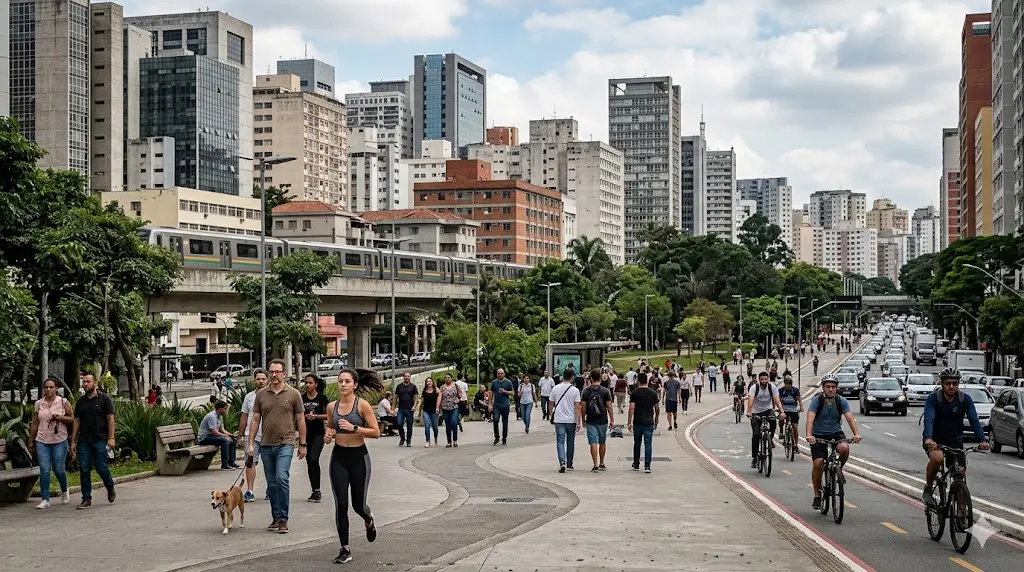
Urbanisation and human health are deeply connected. As more people move into cities, researchers are finding that urban living can improve access to healthcare, education, and jobs, but it can also increase stress, pollution exposure, and lifestyle-related illnesses. The real story isn't whether cities are good or bad for health. It's about how cities are designed and managed.
Urbanisation affects human health through air quality, housing, mental stress, food access, sanitation, transport, and healthcare systems. Research in 2026 shows that well-planned cities tend to improve life expectancy, while overcrowded and polluted urban areas often increase chronic disease, anxiety, and respiratory illness.
What Is Urbanisation and Human Health?
Urbanisation: the process where more people move from rural areas into towns and cities, leading to population growth and city expansion.
When researchers discuss urbanisation and human health, they usually focus on how city environments influence physical and mental wellbeing. That includes everything from clean water and hospitals to traffic noise and loneliness.
Here's the thing most people overlook: cities themselves aren't unhealthy. Poor planning is usually the real problem.
I've seen reports where two neighborhoods inside the same city had a life expectancy gap of more than ten years simply because one had parks, better housing, and safer streets while the other struggled with pollution and overcrowding. Same city. Totally different health outcomes.
Urban health studies now examine several connected factors:
Air and water quality
Access to healthcare
Mental health pressures
Housing density
Public transport
Food systems
Green spaces
Heat exposure
Researchers also use terms like urban public health and city health research when studying these patterns.
Why Urbanisation and Human Health Matter in 2026
By 2026, more than half of the global population lives in urban areas, and that number keeps climbing. Cities are expanding faster than many governments can manage. That creates opportunities, but also some messy health challenges.
One major research finding is that urbanisation no longer affects only mega-cities. Mid-sized cities are now experiencing many of the same issues once linked only to huge metropolitan areas.
Air pollution remains one of the biggest concerns. Fine particulate matter from vehicles, industrial activity, and construction has been linked to asthma, heart disease, strokes, and even cognitive decline. In some urban zones, children grow up breathing unhealthy air almost daily.
But there’s another side to this.
Urban areas often provide faster emergency care, better specialist treatment, and improved maternal health services compared to isolated rural regions. So while city life can increase certain risks, it can also save lives.
What makes 2026 different is the growing role of climate pressure. Heat waves are hitting urban populations harder because cities trap heat through concrete and asphalt. Researchers now call this the “urban heat island” effect, and honestly, it’s becoming difficult to ignore.
A recent trend in public health research also points to rising loneliness in crowded cities. Sounds strange, right? Millions of people nearby, yet many feel isolated. That’s the counterintuitive part. Density doesn't always create connection.
Expert Tip
If you're evaluating urban health data, don't focus only on hospital access. Look at daily living conditions. Walkability, housing quality, public transport, and access to fresh food usually tell a more accurate story about long-term health outcomes.
How Does Urbanisation Affect Human Health? Step by Step
Urbanisation influences health through a chain reaction. One change in city design can affect multiple health outcomes at once.
1. Population Density Changes Daily Living
As cities grow, people live closer together. That can improve economic activity and service access, but overcrowding may increase infectious disease spread and mental fatigue.
In rapidly growing urban zones, limited housing often leads to cramped living conditions. Researchers frequently connect this to sleep problems, anxiety, and higher infection rates.
At the same time, compact cities can support better healthcare delivery because clinics and hospitals are easier to reach.
2. Transportation Shapes Physical Health
People living in car-dependent cities often exercise less. Long commuting times also increase stress hormones.
Cities with cycling lanes, pedestrian-friendly streets, and reliable public transport usually report lower obesity rates and improved cardiovascular health.
One hypothetical but realistic example: imagine two office workers with similar jobs. One spends two hours daily in traffic and barely walks. The other uses public transit and walks twenty minutes each day. After several years, the health gap between them can become dramatic.
3. Pollution Exposure Increases
This is probably the most studied urban health issue.
Air pollution from traffic and industrial activity contributes to:
Asthma
Lung disease
Heart conditions
Pregnancy complications
Reduced immune function
Noise pollution also matters more than many people realize. Constant traffic sounds can disrupt sleep quality and increase stress over time.
Water contamination remains another issue in poorly managed urban expansion zones.
4. Food Systems Shift
Urbanisation changes eating habits. Fast food availability rises while traditional diets sometimes disappear.
Researchers have linked this transition to higher rates of diabetes and obesity. Yet some cities improve nutrition by supporting local markets and urban farming programs.
What most guides miss is that food access isn't only about income. Time matters too. Exhausted workers often choose convenience over nutrition because city schedules can be brutal.
5. Mental Health Pressures Grow
Urban mental health research has exploded during the last decade.
Crowding, high living costs, social comparison, job pressure, and reduced green space can increase depression and anxiety levels. Younger adults seem especially affected.
Still, cities can also provide better access to therapy, support groups, and mental health professionals.
That balance is important.
Expert Tip
Green space research consistently shows measurable health improvements from even small parks or tree-lined streets. A fifteen-minute walk in a shaded urban park may reduce stress more than people expect.
What Research Findings Say About Urban Public Health
Researchers studying urban public health have identified several consistent patterns across countries.
Cities With Better Planning Usually Produce Better Health Outcomes
Planned urban development often leads to:
Cleaner transport systems
Safer housing
Better waste management
Improved emergency response
Lower disease transmission
Singapore is frequently cited in urban health discussions because it combines dense living with strong sanitation and green infrastructure. Meanwhile, some rapidly expanding cities struggle because infrastructure growth can't keep pace with population increases.
Inequality Inside Cities Creates Health Gaps
This is one of the strongest findings in urban health studies.
People living only a few miles apart can experience dramatically different health outcomes depending on income, housing, pollution exposure, and healthcare access.
In my experience reading urban health reports, inequality often matters more than city size itself. A wealthy district with parks and clean transit can produce excellent health statistics, while nearby low-income areas may struggle with respiratory illness and chronic stress.
Heat Exposure Is Becoming a Serious Threat
Urban temperatures rise faster due to concrete-heavy environments.
Researchers now connect urban heat exposure to:
Heart stress
Kidney problems
Dehydration
Increased mortality among elderly populations
Low-income communities usually face the highest risks because they often lack cooling systems and tree cover.
The Unexpected Side of Urbanisation
You might assume rural living is always healthier. Not necessarily.
Some rural communities face limited healthcare access, delayed emergency response times, and fewer specialists. Urban residents often survive medical emergencies at higher rates simply because hospitals are closer.
That’s the nuance people sometimes miss.
Urbanisation can improve lifespan while simultaneously increasing chronic disease risks. Both realities can exist together.
A researcher once described cities as “health amplifiers.” Good systems improve outcomes quickly. Bad systems spread harm just as fast.
Honestly, that description probably captures modern urban life better than most academic definitions.
Common Mistake: Assuming Technology Alone Will Fix Urban Health
A lot of city planners now talk about smart cities and digital monitoring. Those tools help, sure. But technology alone won't solve unhealthy urban environments.
A city can install sensors everywhere and still fail if housing remains unsafe or healthcare stays inaccessible.
One mini case study illustrates this well.
Imagine a rapidly growing city investing millions into traffic-monitoring technology while ignoring public transportation. Traffic data improves, yet residents continue breathing polluted air during long commutes. The tech works technically, but public health barely improves.
Human-centered planning matters more than flashy systems.
Expert Tip
When evaluating future urban health trends, pay attention to affordable housing policy. Stable housing strongly affects stress levels, chronic illness risk, and childhood development.
How Can Cities Improve Human Health?
Urban planners and public health researchers usually recommend several practical actions.
Build Walkable Communities
Walkability encourages daily movement without forcing people into formal exercise routines. That's huge because many people simply don't have time for gyms.
Sidewalks, bike lanes, and mixed-use neighborhoods often lead to healthier populations.
Expand Green Infrastructure
Trees, parks, rooftop gardens, and shaded public spaces reduce heat and improve mental wellbeing.
Even modest green areas can improve air quality and encourage social interaction.
Improve Public Transportation
Reliable transport reduces pollution exposure and commuting stress while improving access to jobs and healthcare.
Cities with efficient transit systems often report stronger overall public health indicators.
Strengthen Local Healthcare Access
Large hospitals matter, but neighborhood clinics are equally important.
Early treatment reduces pressure on emergency systems and improves preventive care outcomes.
Address Urban Inequality
This one is difficult but necessary.
Research consistently shows that health gaps shrink when cities improve affordable housing, sanitation, education, and employment opportunities.
Expert Tips: What Actually Works
Here's my hot take: urban health discussions spend too much time focusing on futuristic solutions and not enough time discussing basic infrastructure.
Clean sidewalks. Reliable buses. Safe housing. Public toilets. Trees.
Those simple things often improve health more than expensive wellness campaigns.
I've also noticed that cities succeeding in public health usually encourage community interaction. Isolation quietly damages mental health, and modern city life sometimes pushes people into disconnected routines.
One thing that genuinely surprised researchers in recent years is how much neighborhood design affects stress levels. Wide roads, noise, lack of shade, and constant traffic don't just annoy people. They physically affect sleep, hormones, and blood pressure.
That changes the conversation from “urban comfort” to actual medical impact.
Expert Tip
Urban health isn't only a government responsibility. Businesses influence city wellbeing too. Workplace flexibility, healthier building design, and employee commute support can significantly reduce stress-related illness.
People Most Asked About Urbanisation and Human Health
Why does urbanisation affect human health?
Urbanisation changes where and how people live. It influences pollution exposure, healthcare access, housing quality, physical activity, stress levels, and diet. Those factors directly affect physical and mental health outcomes.
Is urban living healthier than rural living?
It depends on the city and the rural area being compared. Urban residents often have better healthcare access, while rural residents may benefit from cleaner environments and lower stress levels. Both settings carry different health risks.
What are the biggest health problems linked to urbanisation?
Researchers most commonly identify air pollution, obesity, mental health disorders, respiratory illness, heat exposure, and chronic stress as major urban health concerns.
How does pollution affect city populations?
Pollution can damage the lungs, heart, and immune system. Long-term exposure increases risks for asthma, cardiovascular disease, strokes, and developmental problems in children.
Can urban planning improve health?
Yes. Walkable streets, green spaces, better public transportation, safe housing, and local healthcare services often improve public health outcomes significantly.
Why is mental health becoming a bigger urban issue?
Fast-paced lifestyles, high costs, social isolation, overcrowding, and reduced access to nature can increase anxiety and depression in urban populations.
What role does climate change play in urban health?
Climate change intensifies heat waves, flooding, and air pollution in cities. Urban populations face greater health risks when infrastructure isn't prepared for extreme weather conditions.
Final Thoughts on Urbanisation and Human Health
Research findings about urbanisation and human health show a complicated but clear reality: cities can either strengthen wellbeing or quietly damage it depending on how they're designed.
Urbanisation itself isn't the enemy. Poor planning, inequality, pollution, and disconnected communities create most of the serious health problems researchers discuss today.
The encouraging part is that healthier cities are possible. Many solutions already exist, and in most cases they aren't wildly complicated. Cleaner transport, better housing, more green space, and accessible healthcare consistently improve outcomes.
As urban populations continue growing in 2026 and beyond, the real challenge isn't stopping urbanisation. It's building cities where people can actually thrive.
Our network platforms like PR Wires and Web Info Matrix help businesses, startups, and agencies strengthen brand visibility through press release distribution services, digital marketing services, and high authority backlinks that support SEO ranking, media coverage, organic traffic, and instant publishing for long-term online growth.