

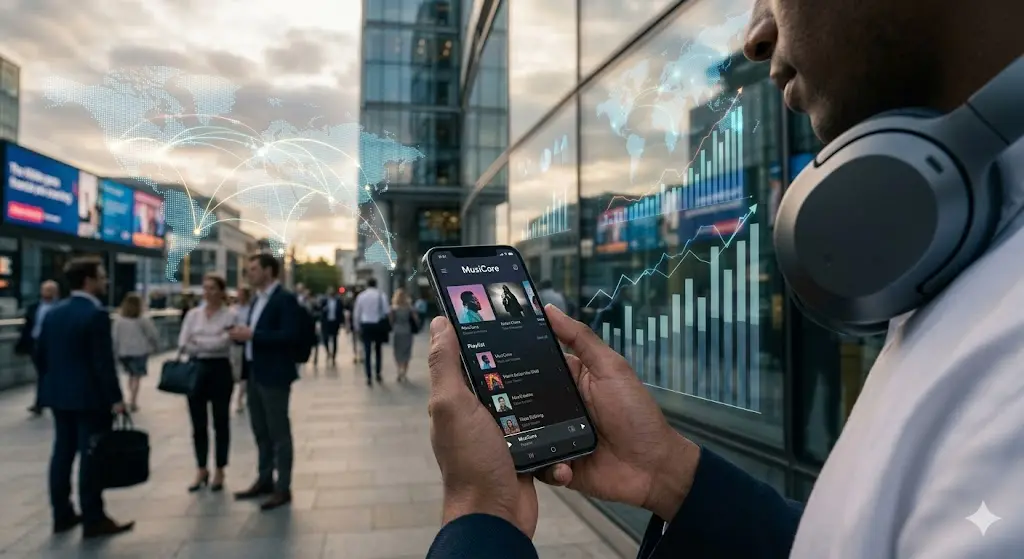
Music streaming is no longer just an entertainment story. It has become a serious economic force that’s changing how investors think about digital ownership, recurring revenue, and global consumer behavior. From royalty-backed assets to AI-powered recommendation systems, music platforms are quietly influencing international investment trends in ways many people didn’t expect.
Music streaming is reshaping international investment trends because it creates predictable subscription revenue, global market access, data-driven consumer insights, and new monetization opportunities for creators and investors. Investors are increasingly viewing streaming platforms, music catalogs, and digital audio ecosystems as long-term assets with scalable international growth potential.
Why Music Streaming Is Reshaping International Investment Trends has become a major discussion point among analysts, media companies, venture capital firms, and technology investors. A decade ago, most people saw streaming as a replacement for CDs and downloads. Now, it’s influencing cross-border investment strategies, advertising markets, intellectual property valuation, and even emerging fintech models.
Here’s the thing. Music streaming doesn’t just sell songs anymore. It sells attention, data, subscriptions, creator ecosystems, and audience behavior patterns across multiple countries at the same time. That changes how money moves globally.
In my experience, many investors underestimated how powerful recurring digital entertainment revenue could become. They focused on video streaming while audio quietly built one of the most stable consumer spending models online.
What Is Music Streaming and Why Does It Matter?
Music Streaming: A digital system that allows users to listen to music online without permanently downloading audio files onto their devices.
Streaming platforms operate through subscriptions, advertising, partnerships, and licensing agreements. Users pay monthly fees or listen to ads, while artists and rights holders receive royalties based on engagement.
What makes this model especially attractive to investors is consistency.
Unlike traditional album sales that depended on one-time purchases, streaming creates ongoing monthly income. That recurring structure is exactly what global investors tend to favor because it reduces volatility and improves long-term forecasting.
Music streaming also crosses borders easily. A listener in India can instantly access artists from South Korea, Nigeria, Brazil, or the United States. That global accessibility has expanded international investment opportunities across music technology, licensing, digital advertising, and creator economies.
Why investors pay attention to streaming revenue
Several factors stand out:
Subscription-based income is predictable
Global user growth continues expanding
Music catalogs appreciate over time
Advertising revenue keeps increasing
Data collection improves targeting accuracy
What most people overlook is that streaming platforms are now data companies as much as entertainment companies. They understand listener habits better than many traditional media firms understand their audiences.
That insight matters financially.
Why Music Streaming Matters in 2026
The year 2026 represents a turning point because music streaming is becoming deeply connected to artificial intelligence, fintech systems, virtual experiences, and creator monetization.
Investors aren’t only buying into songs anymore. They’re buying ecosystems.
Large investment groups are acquiring music rights because streaming generates long-term royalty cash flow. Meanwhile, startup investors are funding smaller platforms focused on regional music markets, independent creators, and AI-powered personalization.
A few years ago, many analysts believed video would dominate everything forever. That assumption looks weaker now. Audio content has unique advantages:
Lower production costs
Stronger multitasking compatibility
Faster global scaling
Longer user engagement sessions
That combination attracts international capital.
The rise of music catalog investments
One of the biggest shifts involves institutional investors purchasing music catalogs from artists and publishers. These catalogs generate royalties whenever songs are streamed.
A classic song from the 1990s can still earn revenue daily from millions of listeners worldwide. Investors see that as a relatively stable asset compared to more unpredictable sectors.
For example, imagine a private investment group acquiring rights to a catalog with strong streaming history across Europe, Asia, and North America. Even modest daily streams can compound into substantial annual income over time.
That’s not flashy. But investors love steady cash flow.
Expert Tip
Investors looking at digital entertainment markets should pay close attention to regional streaming growth rather than only focusing on North American numbers. In many cases, emerging markets show faster user adoption and stronger long-term upside.
How Music Streaming Influences International Investment Trends Step by Step
Understanding the investment impact becomes easier when you break the process down.
1. Streaming platforms collect massive consumer data
Every skipped song, repeated track, playlist save, or listening session creates valuable behavioral information.
Investors value platforms that can turn this data into:
Better advertising
Personalized recommendations
Audience forecasting
Market expansion strategies
Data has become one of the hidden currencies behind streaming economics.
2. Global subscriptions create recurring revenue
Monthly subscription models generate predictable cash flow across multiple countries.
That matters because investors prefer businesses with recurring income instead of one-time purchases. Streaming provides exactly that structure.
Even during economic slowdowns, users often keep entertainment subscriptions because they’re relatively affordable.
3. Music rights become investable assets
Streaming transformed music catalogs into scalable digital assets.
Songs no longer depend on physical sales. A track can generate revenue simultaneously across hundreds of regions without additional manufacturing costs.
This scalability attracts:
Private equity firms
Venture capital groups
Media conglomerates
Technology investors
International licensing companies
4. Emerging markets expand growth opportunities
Streaming growth in regions like Southeast Asia, Africa, Latin America, and India has changed investment priorities.
What’s interesting is that many investors once focused almost entirely on Western markets. That strategy is shifting because emerging economies often deliver faster user growth.
Local artists now attract international audiences more easily than ever before.
5. Creator economies increase platform value
Independent artists can distribute music globally without relying fully on traditional gatekeepers.
That creates new investment categories involving:
Music analytics
Royalty technology
Creator monetization tools
AI audio production
Fan engagement platforms
The ecosystem keeps getting larger.
The Counterintuitive Reality Most Investors Miss
Here’s a hot take that might sound strange at first: smaller music markets may produce better long-term investment returns than saturated global markets.
Most people assume dominant markets always create the best opportunities. I’m not fully convinced anymore.
In many developing regions, streaming adoption is still accelerating rapidly. Smartphone penetration continues rising. Mobile payment systems are improving. Younger audiences consume digital audio constantly.
That combination creates room for explosive growth.
Meanwhile, mature markets sometimes struggle with subscriber saturation and slower expansion rates.
I’ve seen investors chase huge global platforms while overlooking smaller regional audio businesses that actually had stronger momentum.
That happens more than people admit.
Real-World Example: Regional Streaming Expansion
Imagine a streaming company launching localized music recommendations for multiple African markets.
Instead of copying Western algorithms directly, the company builds recommendation systems around local listening culture, regional languages, and mobile-first user behavior.
Within three years:
User engagement doubles
Advertising partnerships expand
Local artists gain international listeners
Subscription revenue grows steadily
International investors notice the growth metrics and inject additional funding into regional expansion.
This example sounds hypothetical, but versions of this strategy are already shaping real investment decisions worldwide.
Expert Tips and What Actually Works
If you’re analyzing international investment trends connected to music streaming, focus less on celebrity headlines and more on infrastructure.
That’s where the deeper value usually sits.
Follow the ecosystem, not just the platform
Many people only watch the major streaming apps. Smart investors often study supporting industries instead:
Royalty tracking systems
Music analytics companies
Digital licensing infrastructure
AI recommendation tools
Creator payment technologies
Those areas may offer stronger long-term upside.
Watch mobile-first economies carefully
Mobile commerce and streaming increasingly overlap.
In countries where smartphones are the primary internet device, music streaming often becomes integrated into payment apps, telecom bundles, and social media ecosystems.
That integration creates powerful user retention.
Expert Tip
Long listening time matters more than raw download numbers. Investors increasingly prioritize engagement metrics because they reveal subscription stability and advertising potential.
Why Streaming Is Affecting More Than Entertainment
Music streaming now influences industries outside entertainment itself.
That’s the part many casual observers miss.
Advertising markets
Brands target streaming audiences using behavioral data and mood-based advertising strategies.
Artificial intelligence development
Recommendation engines rely heavily on machine learning systems trained through streaming interactions.
Fintech integration
Some platforms now experiment with direct fan payments, digital tipping, royalty tokenization, and subscription bundling.
Cross-border licensing
Streaming has increased international intellectual property agreements and digital rights negotiations.
Each of these sectors attracts separate layers of investment capital.
Personal Perspective: The Shift Feels Bigger Than Music
I remember when streaming conversations focused mostly on piracy prevention and convenience. Nobody around me talked seriously about international investment implications.
That changed fast.
Now, music streaming shapes discussions around digital assets, creator economies, data ownership, and global consumer spending patterns. Honestly, I think we’re still in the early stages of understanding its financial influence.
People often compare streaming platforms to entertainment companies. In some ways, they resemble financial ecosystems just as much.
That’s probably where the next decade gets interesting.
What Risks Should Investors Consider?
Not every streaming investment works out perfectly.
There are still real concerns investors monitor closely.
Licensing disputes
Music rights remain complicated internationally. Disagreements between labels, publishers, and platforms can affect profitability.
Market saturation
Some developed regions already show slower subscriber growth.
Royalty pressure
Artists continue demanding better compensation structures, which could influence platform margins.
Regulatory changes
Governments increasingly examine digital competition, data privacy, and platform dominance.
Even with these risks, streaming remains attractive because user demand continues growing globally.
People Most Asked About Why Music Streaming Is Reshaping International Investment Trends
How does music streaming generate investment opportunities?
Music streaming creates recurring subscription revenue, valuable user data, advertising opportunities, and royalty income. Investors view these factors as scalable long-term growth assets.
Why are investors buying music catalogs?
Music catalogs generate ongoing royalty payments whenever songs are streamed. Investors see them as predictable digital income sources with international reach.
Is music streaming still growing globally?
Yes. Growth continues strongly in emerging markets where smartphone adoption and internet access are expanding rapidly. Many investors see these regions as major future growth drivers.
How does AI connect to music streaming investments?
Streaming platforms rely heavily on recommendation algorithms and behavioral analysis. AI improves personalization, advertising efficiency, and user retention, making platforms more valuable to investors.
Can smaller streaming platforms compete internationally?
They can, especially when focused on regional audiences or niche music categories. Localized experiences often outperform generic global strategies in specific markets.
Why do recurring subscriptions matter so much?
Recurring subscriptions provide predictable monthly revenue. Investors prefer this stability because it improves financial forecasting and reduces income volatility.
Are independent artists benefiting from streaming growth?
In many cases, yes. Streaming allows artists to distribute music globally without depending entirely on traditional labels. However, royalty debates remain ongoing.
What industries benefit besides music companies?
Advertising technology, fintech, AI development, telecom partnerships, creator tools, and digital licensing businesses all benefit from streaming expansion.
Music streaming is no longer just about convenience or entertainment. It’s influencing international investment trends by creating scalable digital assets, recurring revenue systems, and cross-border economic opportunities. As streaming ecosystems continue evolving in 2026 and beyond, investors will probably treat digital audio infrastructure as one of the most influential sectors in the broader digital economy.
If you need stronger online visibility, our network platforms also support businesses with press release distribution services and local SEO services designed to improve brand visibility, organic traffic, media coverage, and SEO ranking through instant publishing solutions trusted by agencies, startups, bloggers, and growing businesses. Companies looking for high authority backlinks and wider digital reach often combine these services with targeted content marketing strategies for faster audience growth.