

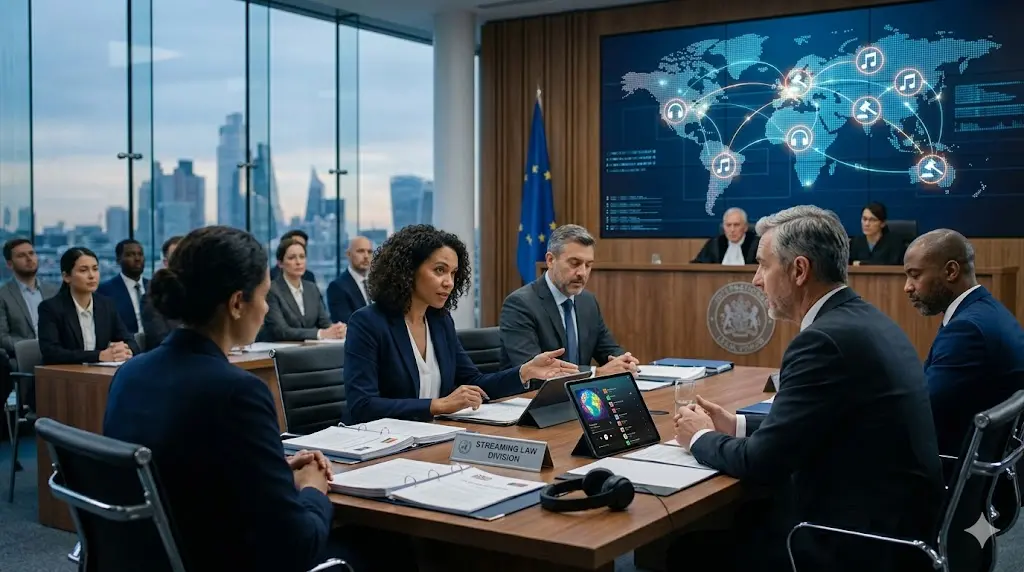
Why music streaming is changing international legal systems comes down to one big reality: digital music doesn’t respect borders the way traditional law does. A song uploaded in one country can generate revenue, licensing disputes, copyright claims, and data privacy issues across dozens of jurisdictions within hours.
Here’s the thing. Most international legal systems were built for physical distribution models. Music streaming platforms completely disrupted that structure. Governments, artists, record labels, and technology companies are now trying to rewrite rules fast enough to keep up with global streaming behavior in 2026.
Music streaming is changing international legal systems because cross-border digital distribution creates new challenges around copyright law, artist royalties, licensing agreements, consumer privacy, and platform regulation. Countries are updating legal frameworks to address global streaming revenue, digital ownership rights, and international content enforcement.
What Is Music Streaming and Why Does It Matter Legally?
Music Streaming: A digital system that allows users to listen to music online without permanently downloading audio files to their devices.
Music streaming changed how people access entertainment. That part’s obvious.
What many people overlook is how deeply it affects international law. Streaming platforms operate globally, but legal systems still function mostly country by country. That mismatch creates complicated issues involving copyright ownership, licensing rights, tax obligations, artist payments, and digital regulation.
I’ve seen smaller artists become unexpectedly successful overseas through streaming platforms while simultaneously struggling to collect proper royalties because licensing systems differed between countries. It sounds strange, but global exposure doesn’t always guarantee fair compensation.
That’s one reason legal reforms are accelerating.
Why Music Streaming Is Changing International Legal Systems in 2026
2026 feels like a pressure point for digital entertainment law.
Streaming now dominates music consumption in most major markets. Governments can’t treat it like a side issue anymore. Legal systems are being forced to adapt because traditional copyright structures simply weren’t designed for instant worldwide access.
Copyright Laws Are Under Pressure
Music rights used to be relatively easier to manage. Physical sales had clearer geographic boundaries.
Streaming erased many of those limits.
A single song may involve multiple copyright owners, international publishers, distribution contracts, and licensing agreements spread across different countries. That complexity creates legal confusion constantly.
Some governments are updating copyright rules to simplify digital rights enforcement. Others are strengthening penalties for unauthorized streaming and piracy-related distribution.
Honestly, the legal paperwork behind one streamed song can be messier than people realize.
Royalty Systems Are Facing Global Criticism
Artists and songwriters increasingly question how streaming revenue gets distributed.
Research and industry reports suggest many musicians earn surprisingly low payouts despite millions of streams. That’s leading to legal discussions about transparency requirements and fair compensation models.
In my experience, public frustration around artist payments is becoming impossible for regulators to ignore.
A realistic example? An independent musician could trend globally online while receiving fragmented royalty payments from several countries using completely different legal standards.
That’s not sustainable forever.
Data Privacy Laws Are Expanding
Streaming platforms collect huge amounts of behavioral data.
They track listening habits, emotional preferences, location patterns, search behavior, and user engagement. Governments are now asking difficult questions about how this data gets stored and shared internationally.
Consumer privacy regulations are becoming stricter partly because of digital entertainment platforms.
And honestly, many users probably don’t realize how much personal information their playlists reveal.
AI-Generated Music Is Creating Legal Confusion
Artificial intelligence is making music law even more complicated.
AI tools can now imitate artist voices, compose songs, and generate instrumentals in seconds. Legal systems are struggling to define ownership rights around machine-generated content.
Who owns an AI-generated song inspired by hundreds of copyrighted tracks?
That question alone is reshaping copyright discussions globally.
How Music Streaming Is Reshaping International Legal Systems Step by Step
Legal change doesn’t happen overnight. It usually develops through pressure, lawsuits, public debate, and industry negotiation.
Here’s how the process typically works.
1. Platforms Expand Faster Than Laws
Streaming services often enter global markets before regulations fully adapt.
Governments then scramble to address licensing disputes, tax obligations, and content moderation issues afterward.
2. Artists and Rights Holders Push Back
Musicians, publishers, and record labels demand fairer payment systems and stronger copyright protection.
This pressure often leads to lawsuits or public campaigns that push lawmakers into action.
3. Governments Introduce Digital Copyright Reforms
Countries begin updating copyright laws specifically for streaming distribution, digital reproduction rights, and online enforcement mechanisms.
Some legal reforms work well. Others create even more confusion.
4. International Cooperation Increases
Streaming platforms operate globally, so countries increasingly coordinate digital copyright standards and data regulations.
That cooperation is still uneven, though.
5. Courts Create New Legal Precedents
Judges often shape streaming law through major copyright rulings and licensing disputes.
Those court decisions eventually influence broader international legal standards.
Common Misconception About Streaming and Copyright
Many people think streaming platforms simply “pay artists automatically” and everything works smoothly behind the scenes.
Not even close.
Royalty structures involve publishers, labels, performance rights organizations, distribution agreements, and international collection agencies. Payments can become fragmented quickly, especially across borders.
Here’s the counterintuitive part: a song becoming globally popular can actually increase legal complexity for artists instead of simplifying their careers.
I remember reading about independent creators struggling to track international royalty data because every territory handled licensing differently. Their audience grew faster than their legal support systems.
That gap still exists.
Why Governments Are Taking Streaming More Seriously
Music streaming now influences culture, commerce, taxation, and digital infrastructure.
That scale attracts government attention.
Taxation and Revenue Collection
Countries want a share of streaming-related profits generated within their markets. Digital service taxes and international revenue reporting rules are becoming more common.
Streaming companies are under growing financial scrutiny.
National Content Regulations
Some governments require platforms to promote local music or meet cultural content quotas.
That creates legal debates around free market access and regional representation.
Platform Accountability
Governments increasingly expect streaming services to remove illegal content, address misinformation, and handle copyright claims more efficiently.
That responsibility keeps expanding.
Consumer Protection Rules
Subscription transparency and auto-renewal systems are facing tighter oversight too.
What most people overlook is that entertainment law and consumer protection law are slowly blending together.
Expert Tips: What Actually Matters for Artists and Businesses
Here’s what most guides miss: legal awareness matters almost as much as creative talent now.
Artists focusing only on music while ignoring licensing rights, metadata ownership, and distribution agreements may face serious financial problems later.
I personally think independent creators should learn basic copyright principles before signing anything internationally. That sounds boring, I know. Still, it saves people from expensive mistakes constantly.
One hot take? Streaming platforms probably helped independent artists gain exposure while simultaneously weakening long-term ownership control in some cases.
That tradeoff deserves more discussion.
Expert Tip
Before distributing music internationally, creators should review territorial licensing rights carefully. Small contract clauses can dramatically affect future royalty collection.
How Music Streaming Is Changing Consumer Rights
Consumers are affected too, not just artists and platforms.
Streaming changed expectations around ownership.
People no longer “own” music collections the way previous generations did. Instead, they access licensed content through subscription ecosystems controlled by private platforms.
That shift raises questions about:
Digital ownership rights
Subscription transparency
Data privacy protection
Algorithmic recommendation fairness
Access restrictions across countries
At least from what I’ve seen, younger users rarely think about licensing until content suddenly disappears from a playlist due to regional legal disputes.
Then people realize streaming access isn’t permanent ownership.
Why International Legal Cooperation Is Growing
No single country can regulate streaming platforms effectively alone.
Music streaming crosses borders instantly, which forces governments into more international cooperation around copyright enforcement and digital commerce regulation.
Several international organizations are discussing:
Unified digital copyright standards
Cross-border royalty systems
International AI music rules
Platform taxation agreements
Consumer privacy protections
Progress is slow sometimes, but momentum is building.
And honestly, it probably has to. Fragmented legal systems can’t fully manage borderless digital media forever.
People Most Asked About Why Music Streaming Is Changing International Legal Systems
Why does music streaming affect international law?
Music streaming affects international law because songs are distributed globally while copyright and licensing systems still operate nationally. This creates legal challenges involving royalties, ownership, taxation, and digital enforcement.
How do streaming platforms pay artists?
Streaming services distribute royalties through agreements involving labels, publishers, distributors, and rights organizations. Payment structures vary widely between countries and contracts.
Are copyright laws changing because of streaming?
Yes. Governments are updating copyright regulations to address digital distribution, online piracy, AI-generated music, and international licensing disputes.
Why are artists unhappy with streaming royalties?
Many artists believe streaming payouts are too low compared to platform profits and audience reach. Independent creators especially struggle with fragmented international royalty systems.
How does AI affect music copyright law?
AI-generated music creates uncertainty around ownership rights, originality standards, and copyright protection. Legal systems are still trying to define how AI-created songs should be regulated.
Do consumers actually own streamed music?
Usually not. Most streaming platforms provide licensed access rather than permanent ownership. Consumers lose access if subscriptions end or licensing agreements change.
Are governments regulating streaming platforms more strictly?
Yes. Governments are increasing oversight around taxation, data privacy, copyright enforcement, and consumer subscription protections.
What’s the biggest legal challenge in music streaming today?
Probably international copyright coordination. Streaming platforms operate globally, but legal systems still differ heavily between countries.
Why music streaming is changing international legal systems ultimately comes down to speed. Technology transformed music distribution faster than governments could rewrite legal frameworks. Now lawmakers, platforms, artists, and consumers are all trying to catch up.
Streaming created incredible access and global exposure opportunities. At the same time, it exposed weaknesses in copyright enforcement, royalty systems, consumer protection, and international digital regulation. Those legal shifts will probably continue evolving for years.
Brands, agencies, and startups aiming for stronger brand visibility and high authority backlinks can benefit from online press release distribution combined with expert link building services. These platforms help improve SEO ranking, boost organic traffic, secure instant publishing opportunities, and increase media coverage for businesses focused on long-term digital growth.